
Enterprise organizations are reaching an important turning point. The gap between ambitious project goals and successful execution has never been more apparent. It is also very evident that digital transformation initiatives, large-scale system implementations, and complex infrastructure projects become critical to staying competitive. Which is why many organizations are realizing that traditional project management methods simply are not enough to keep up with today's demands.
The shift in the conversation about AI having a place in project execution is prominent . The real question now is how quickly organizations can embrace intelligent systems to improve decision-making, reduce delays, and bridge the growing gap between planning and delivery.
The Enterprise Problem Nobody Wants to Admit
If you try to understand the inner workings of any mid-sized enterprise managing multiple concurrent projects today you'll find a familiar scene. The project managers, drowning in administrative work rather than strategic oversight. You will notice teams spending hours building spreadsheets or compiling status reports. All of these things that can simply be automated taking so much energy and space. Even the manual tracking of progress across disconnected tools is a huge time consumer.
A Salesforce implementation project might have a detailed statement of work buried in someone's email, while actual execution happens in a patchwork of systems, project plans in one tool, task tracking in another, meeting notes scattered across platforms.
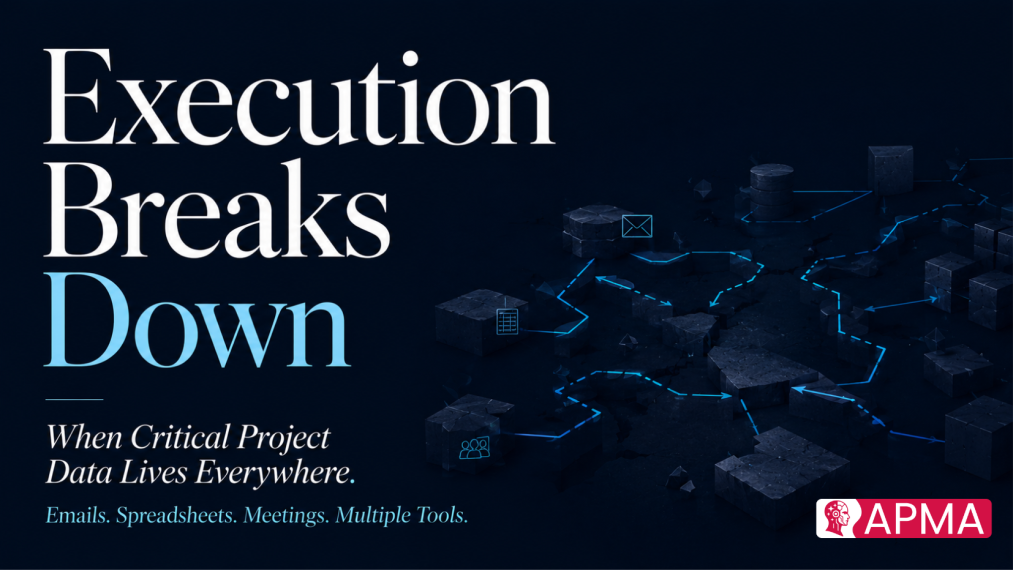
The real cost isn't even the time spent on administration. It's the blind spots that emerge when data lives in silos. Scope creep goes undetected until it's too late.
Scope Creep - The Real Problem
Risk indicators are missed because no single person has visibility across all projects. Meeting insights that should immediately translate to action items instead get transcribed and forgotten. Resource conflicts aren't caught until teams are already overallocated. And when unexpected changes arrive, a new statement of work, approved change orders, shifting priorities, realigning the entire project structure becomes a manual nightmare.
For mid-market enterprises operating with lean PMO teams, this fragmentation translates directly into project delays, budget overruns, and the perpetual feeling that execution is just barely staying ahead of chaos.
Why Current Systems Have Failed?
The legacy of traditional project management software tells the story. These systems were designed for structure and control, not for the dynamic, collaborative reality of modern enterprise projects. They require upfront perfection,complete scope definition, detailed resource allocation, perfectly estimated timelines. But enterprise projects rarely start with perfect information.
More critically, these systems create work rather than reduce it. Adding a task requires manual effort. Updating timelines means clicking through multiple screens. Changes demand re-planning from scratch. The software becomes a burden that project managers maintain rather than a tool that empowers them. And perhaps most problematically, these systems operate as passive repositories of information rather than intelligent partners that help teams make better decisions in real time.
The Need for Intelligent Execution Infrastructure
What enterprises actually need is fundamentally different: a system that doesn't just track work, but understands it. An infrastructure that can take ambiguous inputs, a project description, an uploaded statement of work, meeting discussions, and generate comprehensive, actionable project structures. A platform that continuously monitors for risk, detects scope deviation, and alerts teams before problems compound. Systems that learn from the meeting room and automatically translate conversations into task assignments.
This is intelligent execution infrastructure: technology that amplifies human judgment rather than replacing it, that reduces administrative burden so teams can focus on execution excellence, and that provides real-time visibility across the entire project lifecycle.
Introducing AI Project Partners
At AI Project Partners, we're building exactly this. Founded on the conviction that mid-market enterprises deserve world-class execution infrastructure, we're creating a new category of intelligent project systems designed specifically for organizations managing complex implementations and transformations. Organizations like yours managing Salesforce deployments, ERP implementations, infrastructure migrations, and enterprise modernization initiatives.
We understand the constraints that define your world: lean teams managing ambitious projects, the pressure to deliver on time and within budget, and the challenge of maintaining visibility across work that's inherently complex and cross-functional.
Introducing APMA: Intelligent Execution in Action
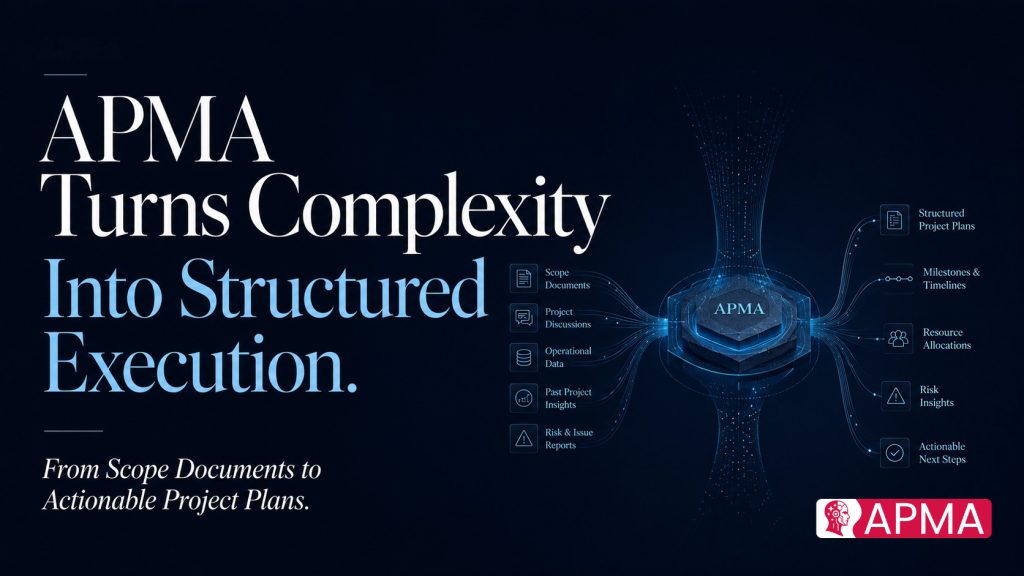
APMA represents our first major system, an AI-powered project management engine built into modern CRM platforms. Here's how it transforms enterprise execution:
From Ambiguity to Clarity: Create a new project with a start date, end date, and brief description. APMA's AI engine generates a comprehensive project plan including detailed milestones, work modules, and tasks, each with realistic timelines and assigned to appropriate resources based on their roles. This gives project managers a head start on scoping rather than the traditional paralysis of a blank slate.
Continuous Alignment: Upload your approved statement of work, and APMA automatically reevaluates the entire project structure to match your actual scope. New change orders arrive? Upload them, and APMA suggests which tasks to create, modify, or remove to maintain project integrity.
Proactive Risk Management: APMA continuously monitors for scope creep, automatically flagging tasks that exceed approved scope and suggesting mitigation strategies. It analyzes project risks, identifies dependency blockers, and projects likely outcomes, giving your team time to act rather than react.
Meeting Intelligence: Your project meetings transform from documentation to action. APMA transcribes discussions, identifies action items, and automatically creates or updates tasks, eliminating the gap between conversation and execution.
Real-Time Transparency: Gantt charts update as work progresses. Status emails flow automatically to team members. Audit logs track every change. Your PMO finally has genuine real-time visibility.
The Vision Ahead
Enterprise execution excellence shouldn't require perfect information upfront, lean teams managing spreadsheets, or organizations choosing between visibility and efficiency. It should be intelligent, adaptive, and built for the reality of how modern enterprises work.
APMA is the beginning of that transformation. The first system that doesn't just record project management, it enables it.
Welcome to the future of enterprise execution.

0 Comments