

Most project leaders spend 40% of their time gathering information. Emails, Slack threads, status spreadsheets, last Friday's update that's already stale. By the time you have clarity on what's happening, decisions that could have been made last week are now impossible.
Here's the problem: traditional AI project management software won't fix this. It's built for tracking, not thinking. It reports what already happened. What you need is something fundamentally different, an AI project management assistant that thinks like a strategist, watches your projects unfold in real-time, and alerts you to problems before they compound.
That's where APMA comes in. APMA is an intelligent AI project assistant purpose-built to understand complex, specialized project delivery. It doesn't just log tasks, t predicts risks, optimizes resources, and flags emerging problems days before they impact your timeline. It's the thinking layer most project leaders are missing.
The difference between tracking and thinking is the difference between surviving projects and shipping them on time. APMA is built for the latter.
The $1.3 Trillion Problem Nobody Talks About
Here's a number that should shake you: 70% of projects fail to meet their original timelines. That translates to roughly $1.3 trillion wasted annually on project delays in the US alone.
Most leaders blame scope creep, resource constraints, or team velocity. But here's the uncomfortable truth: the real killer is invisibility. By the time a problem becomes obvious, it's already too late to fix cheaply.
AI for project management solves for invisibility. It acts like a persistent nervous system for your operation, constantly monitoring, assessing, and alerting. When resource overallocation happens, it flags it immediately. When a dependency chain creates a bottleneck three weeks out, you know today, not on the day it impacts deliverables.

The Three Ways Projects Actually Fail (And How AI Stops Them)
Most project failures fall into three categories. Recognizing them is half the battle.
-
The Invisible Overload
Your team looks fine on paper. Hours allocated? Looks balanced. Then someone gets pulled for an emergency. Their slack vanishes overnight. Two people who were barely keeping up are now drowning. Nobody escalates until the deadline misses by a week.
AI project management software catches this instantly. APMA's resource monitoring catches it in real-time. The system knows your team member just hit 110% capacity. It flags it before they're overwhelmed, giving you time to rebalance, defer work, or bring in help.
-
The Optimistic Timeline
Your team optimistically estimates a feature will take 3 weeks. It always takes 4 weeks. Management allocates 3.5 weeks as a "compromise." The project ships late again. Next project, same thing repeats.
An AI project assistant like APMA learns your team's actual velocity. It knows that when your team says "three weeks," based on historical data, they mean four. It won't let you make that same mistake twice. APMA builds institutional memory that your organization actually uses.
-
The Dependency Domino
Task A depends on Task B. Task B depends on Task C. When Task C slips by three days, it creates a cascade that shifts your entire timeline. But you don't realize this until the last minute because dependencies are scattered across Jira, Asana, and someone's notebook.
AI for project management solves this by mapping and stress-testing your entire dependency chain. APMA tells you today which dependencies are vulnerable, so you can shore them up before they become crises. It's like having a risk analyst running continuously in the background.
What Actually Happens When You Implement AI Project Delivery?
This isn't theoretical. Companies using intelligent AI project management software are reporting:
- 28% improvement in on-time delivery (vs. traditional tools)
- 35% reduction in meetings (because AI-generated summaries replace status calls)
- 41% faster risk identification (days or weeks earlier than manual processes)
- 52% increase in team capacity visibility (no more surprises about resource availability)
Here's the kicker: These improvements compound. Better visibility leads to better decisions. Better decisions lead to fewer fires. Less firefighting means more time for actual work.
But here's what separates AI project assistant tools from fancy task trackers: They don't just report what happened. They anticipate what's about to happen. That predictive layer is where the real value lives.
What Separates Good AI from Pretend AI?
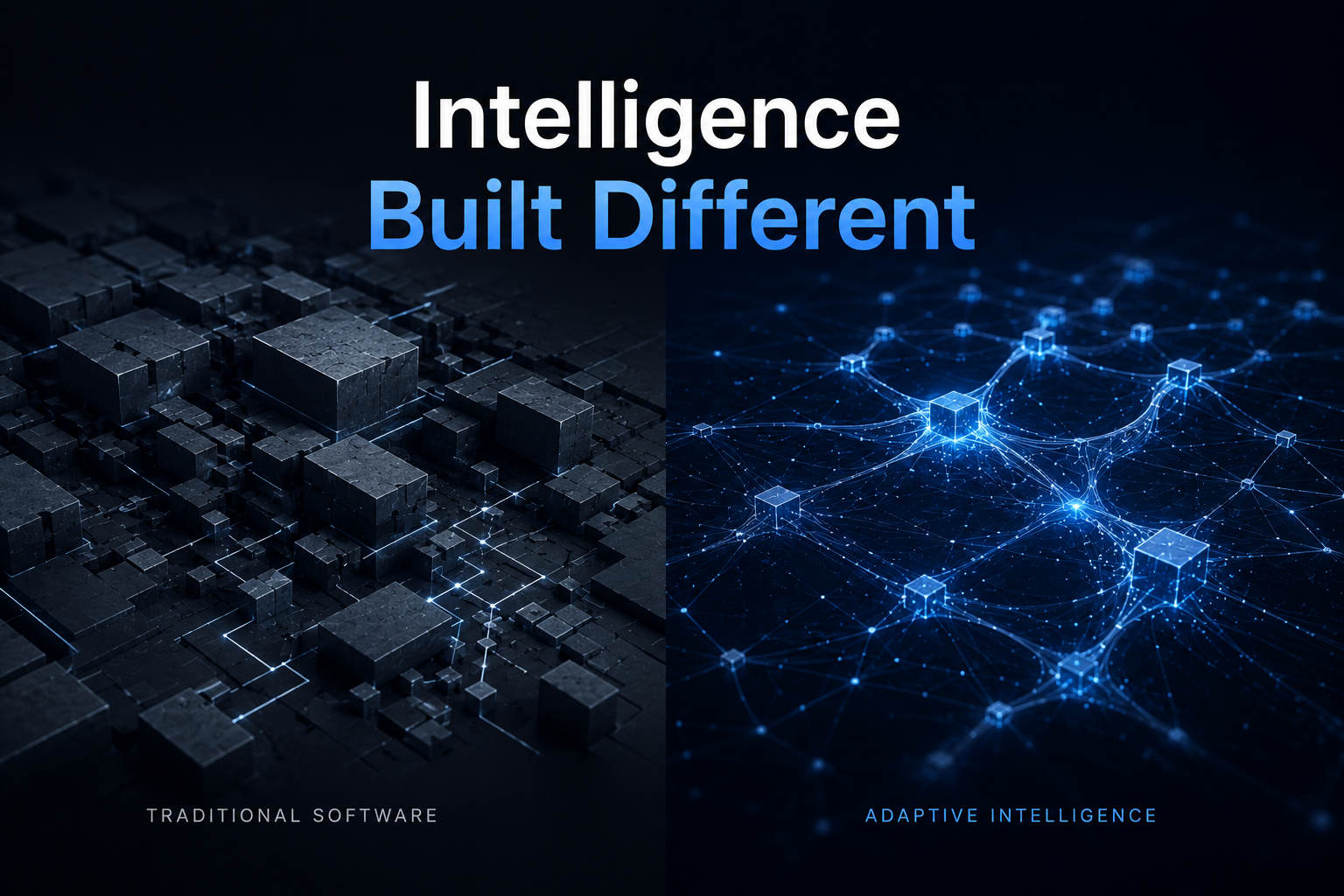
Not all AI project management software is created equal. Here's what matters:
The Mediocre Approach:
- Adds machine learning to legacy tools (slaps a band-aid on a broken system)
- Gives generic alerts ("Task is overdue") that everyone ignores
- Requires manual inputs and constant supervision (which defeats the purpose)
- Treats all projects the same (applies one-size-fits-all logic)
The Intelligent Approach (APMA):
- Built specifically for complex, specialized project delivery from the ground up
- Understands context, learns from your historical patterns, and adapts recommendations
- Proactively flags emerging problems before they escalate, no manual input required
- Recognizes that a design project works differently than an infrastructure project or client delivery
- Integrates seamlessly with your existing tools without forcing migrations
- Gets smarter with every project cycle, building institutional knowledge
This is what APMA delivers. It's not a task tracker with AI sprinkled on top. It's an AI project management assistant designed to think about your projects the way a seasoned program manager would, constantly monitoring, pattern-matching, and anticipating problems.
The difference between these two approaches? One saves you time. The other changes how you deliver projects.
A Real Scenario: The Difference AI Makes
Without AI:
- Monday: VP thinks project is on track (based on last Friday's update)
- Wednesday: Critical developer gets pulled to a production issue
- Thursday: That developer wasn't the only one who knew the code. Dependencies shatter.
- Friday: VP learns project is now 2 weeks behind
- Cost: chaos, emergency overtime, stressed team, late delivery, damage control
With APMA (AI project management software):
- Monday: APMA's system identifies that your lead developer is already at 95% capacity with pending work
- Monday afternoon: APMA alerts you that week five will have a resource bottleneck based on current commitments
- Tuesday: You have a meeting with the developer's manager and discuss options
- Wednesday: You've already reshuffled priorities and brought in contract help
- Friday: Project stays on track
- Cost: one strategic conversation instead of crisis mode
That's AI project delivery in practice with APMA. Not magic. Just thinking faster than problems multiply.
The Real Cost of Waiting
Here's what keeps executives up at night: your competitors aren't debating whether to implement AI project management assistant tools anymore. They're already using them.
Companies in San Francisco, New York, and Chicago are already managing portfolios with AI that learns and predicts. They're shipping features faster. They're running smaller teams more efficiently. They're becoming the benchmark.
If you're still manually tracking projects in 2024-2025, you're not being "cautious." You're falling behind.
AI for project management isn't a luxury anymore. It's table stakes for organizations that want to stay competitive in fast-moving industries.
How to Actually Get Started (Without the Fluff)
You don't need a massive transformation. Here's what works:
Step 1: Audit Your Pain Points
- Where do projects slip most often?
- Which resources are perpetually overallocated?
- What decisions happen too late?
Step 2: Evaluate the Right Tool
- Not all AI project assistant platforms understand specialized delivery
- Most are generic task trackers with bells and whistles
- Look for systems specifically designed for complex project delivery, like APMA, which was built for the chaos of professional services, product delivery, and specialized project execution
- Test whether the tool understands your specific delivery model (not one-size-fits-all logic)
Step 3: Start with one project
- Don't try to migrate everything at once
- Pick a high-visibility, moderately complex project
- Watch what the AI project management assistant surfaces in the first 2-3 weeks
- APMA's insights compound, the more data it sees, the smarter it becomes
Step 4: Measure what matters
- On-time delivery rate
- Resource utilization
- Time spent in meetings vs. time spent executing
- Early vs. late problem detection
After 60 days, you'll know whether AI project delivery with a tool like APMA transforms your operation. Most teams see immediate value and expand adoption within three months.
Why APMA Is Built Differently?
APMA is an AI project management software built with one core philosophy: organizations managing complex, specialized work deserve intelligence that actually understands that work.
Unlike generic task managers, APMA:
- Understands specialized delivery models - It knows professional services projects work differently than product teams. It knows client delivery has different risk profiles than internal R&D. It adapts.
- Predicts before it reacts - APMA doesn't wait for you to flag problems. It watches your projects and alerts you to emerging risks days or weeks early.
- Integrates, doesn't replace - Your team keeps using Jira, Asana, or whatever tools they already know. APMA sits on top, pulling intelligence from your existing systems without forcing migrations.
- Learns from your history - The more projects APMA manages, the smarter it gets about your team's velocity, your risk patterns, and what "on track" actually means for your organization.
- Surfaces what matters - APMA cuts through noise. Instead of 50 alerts about tasks, you get the 3 alerts that actually require decision-making.
For organizations tired of reactive project management, APMA represents the shift to predictive, proactive AI for project management.
Summing Up
An AI project management assistant isn't the future. It's the present. The question is which organizations will lead and which will catch up.
The best teams aren't hoping to deliver projects better. They're deploying systems like APMA that make better delivery inevitable. They've stopped fighting chaos with more emails and more meetings. They've started using intelligence to prevent chaos in the first place.
APMA and AI project management software won't replace your judgment. They will make your judgment better informed, faster, and more likely to succeed. They transform project delivery from reactive firefighting to proactive strategy.
Your team is capable. Your organization is capable. But without visibility into what's actually happening in your projects, without the ability to predict problems instead of just respond to them, you're leaving wins on the table.
The leaders who build this capability into their operations now will be the ones dominating their market in 18 months. The ones waiting to see if it's real will be scrambling to catch up.
AI for project management is proven. It works. It's available. The only variable left is when you'll decide it's worth implementing.
Start with APMA and see how AI project delivery transforms your operation in the first 60 days.
Make that decision today.

